
01 — The feeling of a room
A room comes alive with plants.
Plants are one of the easiest ways to make a room feel more alive, calm, and complete. You do not need to turn your bedroom into a jungle either. Even one or two plants placed in the right spot can completely change how the room feels. If you want the space to feel warmer after dark, our guide to choosing lamps for your room can help you find the right light.
But before choosing a plant only because it looks good, you should think about the amount of natural light your room gets. Some plants enjoy direct sunlight, while others are much more comfortable in darker corners.
Here are different types of plants you can use to decorate your room depending on the light available.
If you are styling the rest of the room too, these simple room decor ideas start with things you may already own.
02 — The plant guide
1. Plants for Bright Direct Light
If your room has a south-facing window or gets several hours of direct sunlight during the day, you have plenty of options.
These plants usually enjoy being close to the window where they can receive strong natural light.
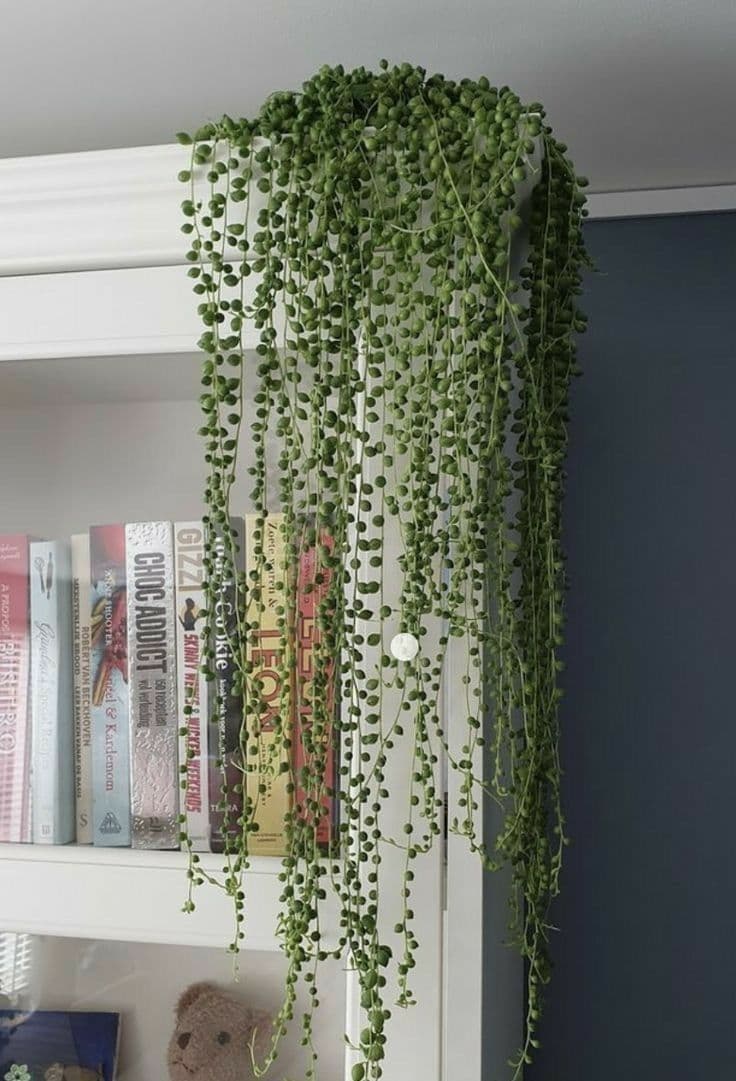
String of Pearls
String of Pearls is a great choice if you want something a little different from a normal standing plant. Its long hanging stems make it especially nice for shelves, hanging pots, or the top of a cabinet.
It can also add some movement to an empty corner instead of having everything sitting on the floor.
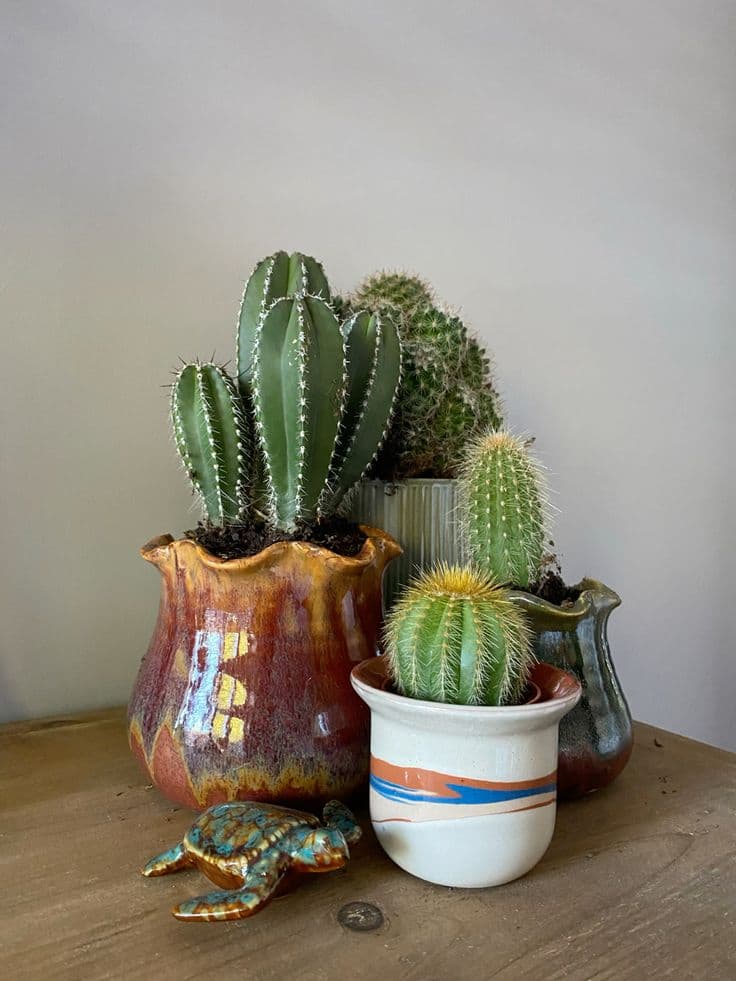
Barrel Cactus
A barrel cactus works really well in minimal rooms because of its simple shape.
You can place a small one on your desk, bedside table, shelf, or windowsill. It also works nicely when combined with wooden furniture, books, or other small decorative objects.
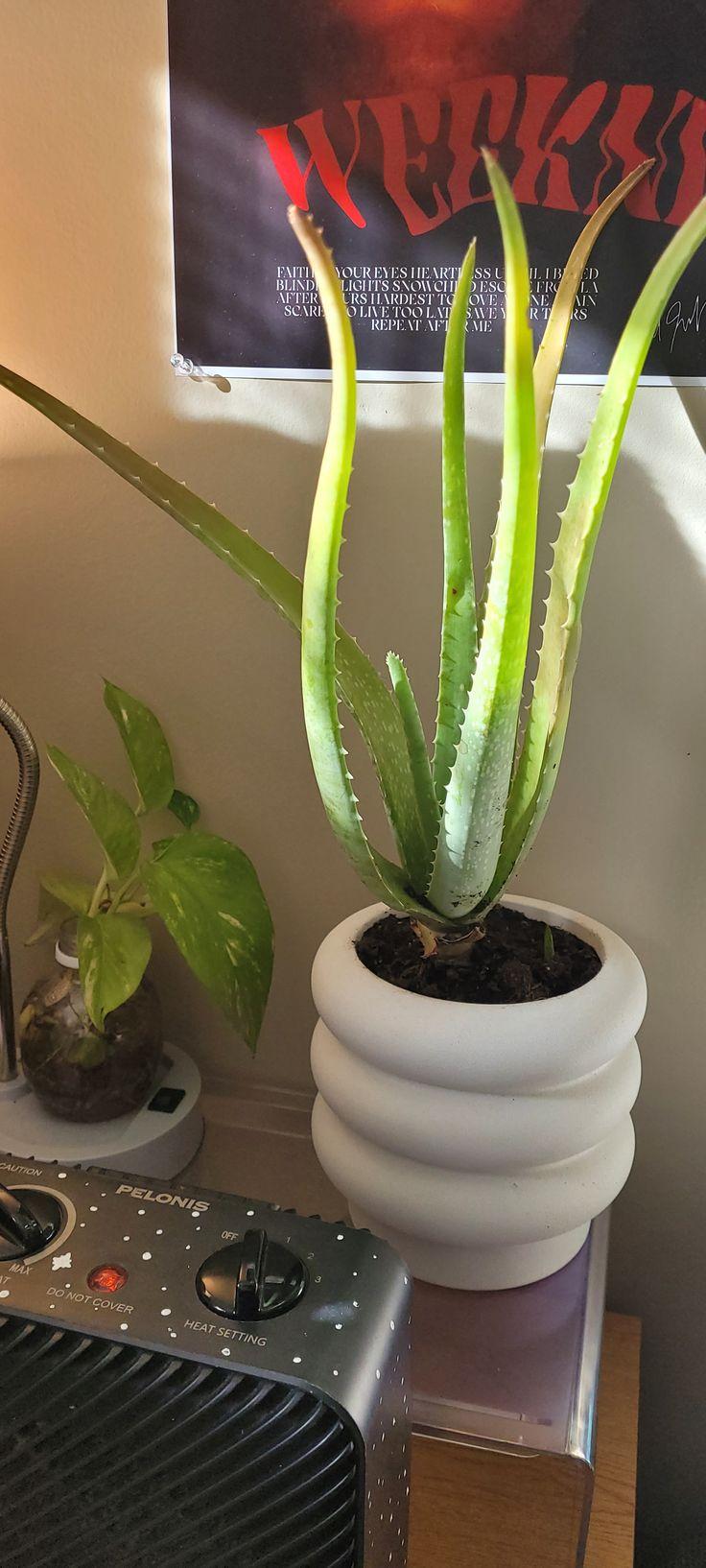
Aloe Vera
Aloe Vera has a clean and recognizable shape that can easily fit into modern or minimal rooms.
It looks particularly good in simple ceramic or concrete pots and works well on desks, shelves, or close to a sunny window.
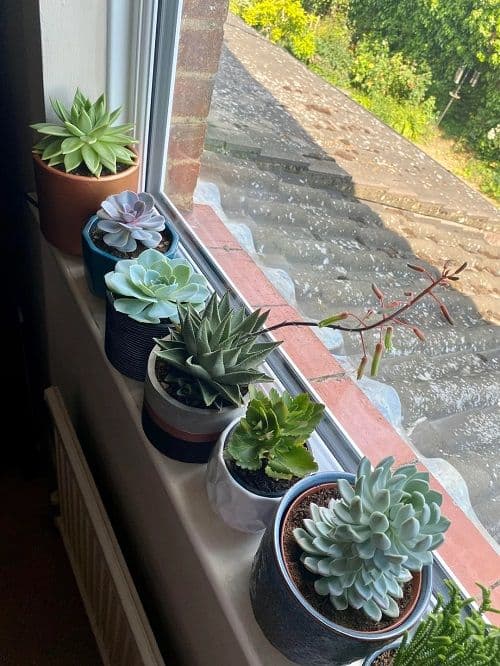
Echeveria
Echeveria is a small succulent with a beautiful geometric shape.
Because it does not take much space, it is useful for decorating smaller areas such as your desk, bookshelf, bedside table, or windowsill.
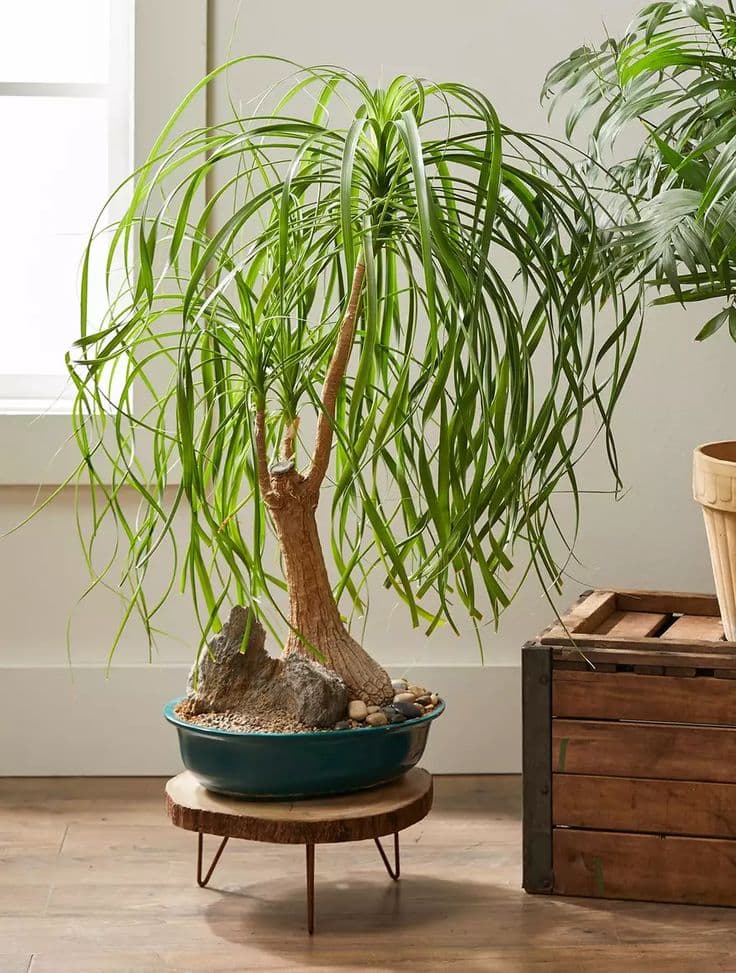
Ponytail Palm
If you want something larger, a Ponytail Palm can become part of the room itself rather than just being a small decoration.
Its thin curved leaves give it a relaxed look, making it interesting for bedrooms with natural, vintage, or bohemian decor.
03 — The plant guide
2. Plants for Bright Indirect Light
Maybe your room gets plenty of daylight, but the sun does not directly hit the plants.
That is actually a very useful type of light because many popular indoor plants prefer bright indirect light.
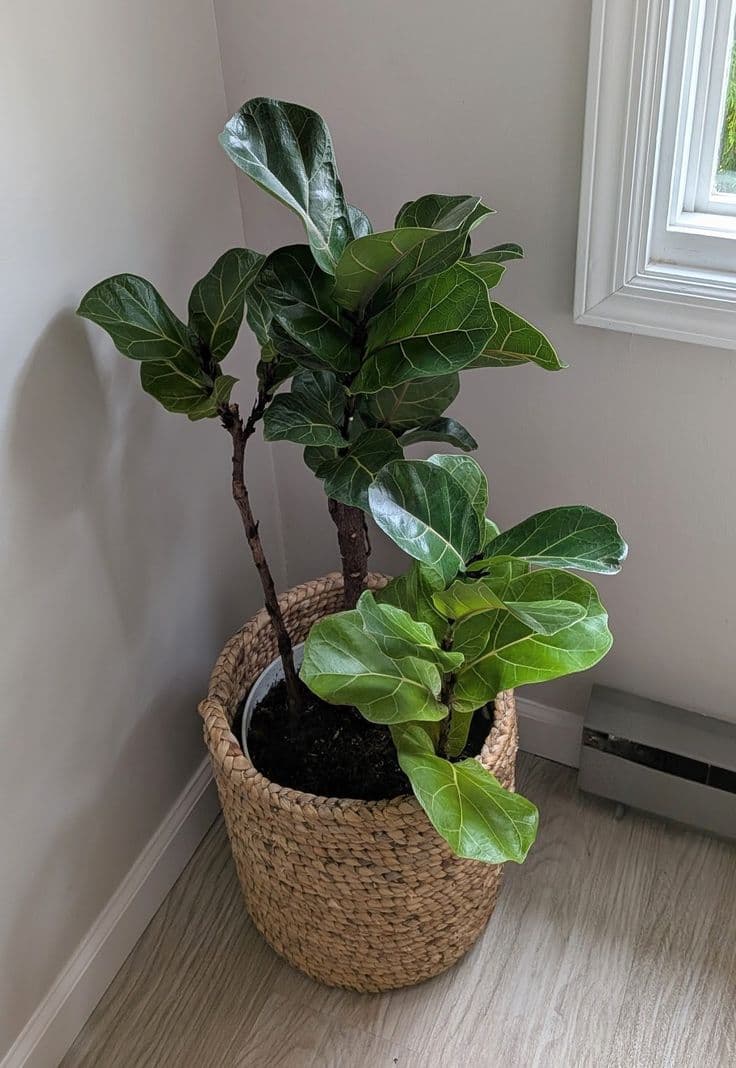
Fiddle Leaf Fig
The Fiddle Leaf Fig has large leaves and a very noticeable shape.
Instead of placing it on furniture, it usually looks better standing directly on the floor beside a window, chair, desk, or empty corner.
Because of its size, it can also help fill a large blank area of the room.
Rubber Plant
A Rubber Plant has thick, dark leaves that can add some contrast to lighter rooms.
It works nicely with neutral colors, wooden furniture, white walls, and darker decorative elements.
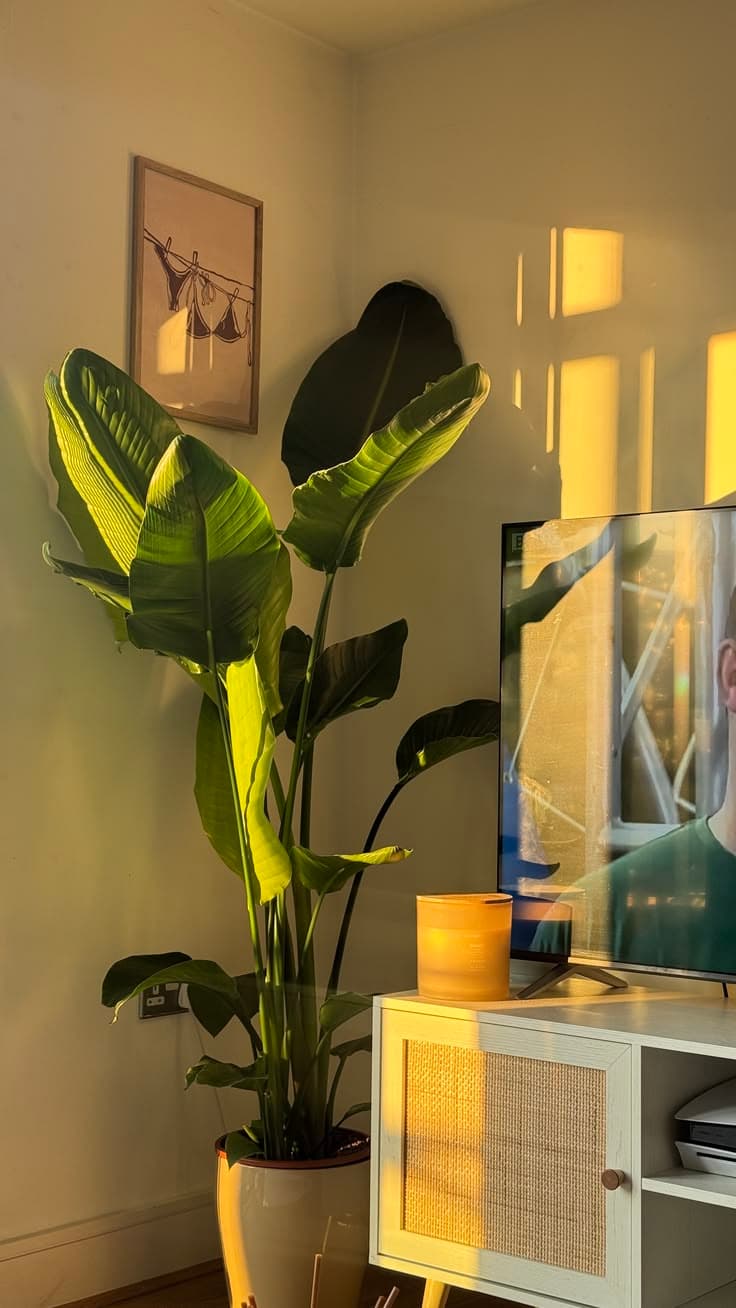
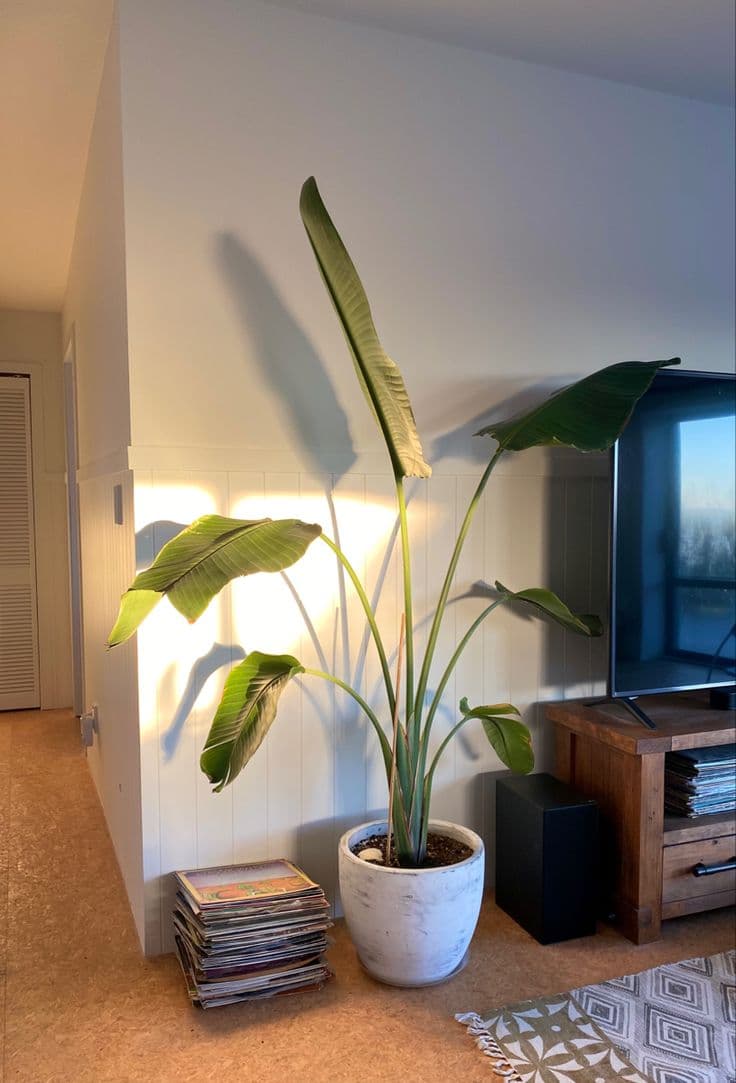
Bird of Paradise
Bird of Paradise is another option if you want a larger plant.
Its long stems and large leaves can make an empty corner much more interesting without needing several smaller decorations around it.
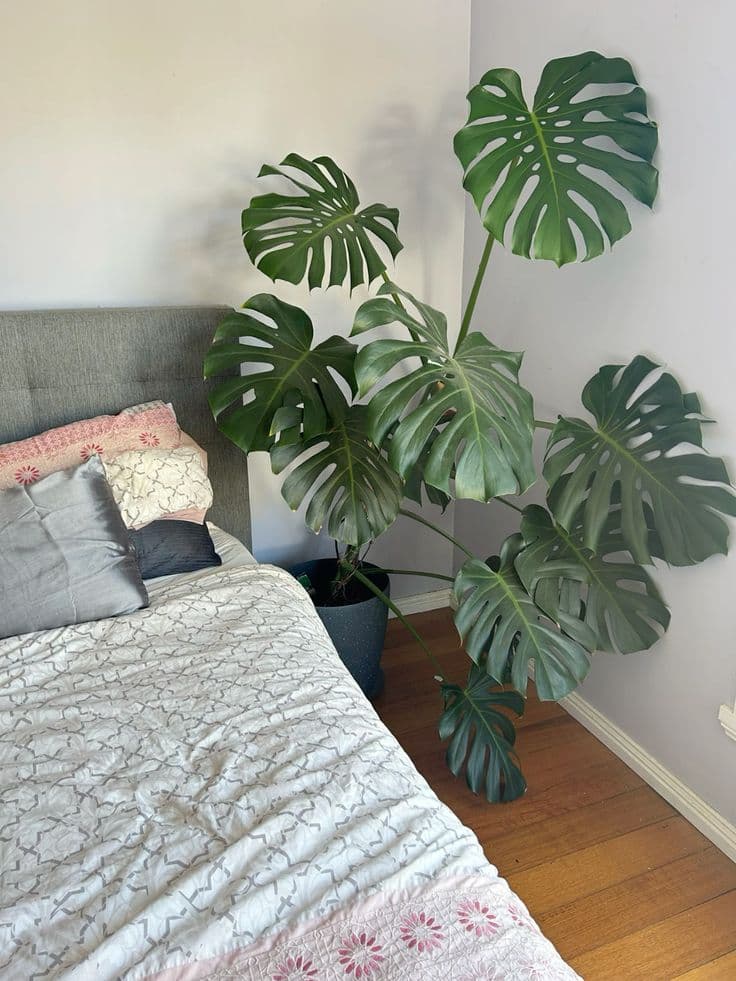
Monstera
Monstera is probably one of the most recognizable indoor plants because of its large split leaves.
It works particularly well beside a bed, desk, mirror, sofa, or reading corner.
If your room feels a little empty, one medium or large Monstera can already make a noticeable difference.
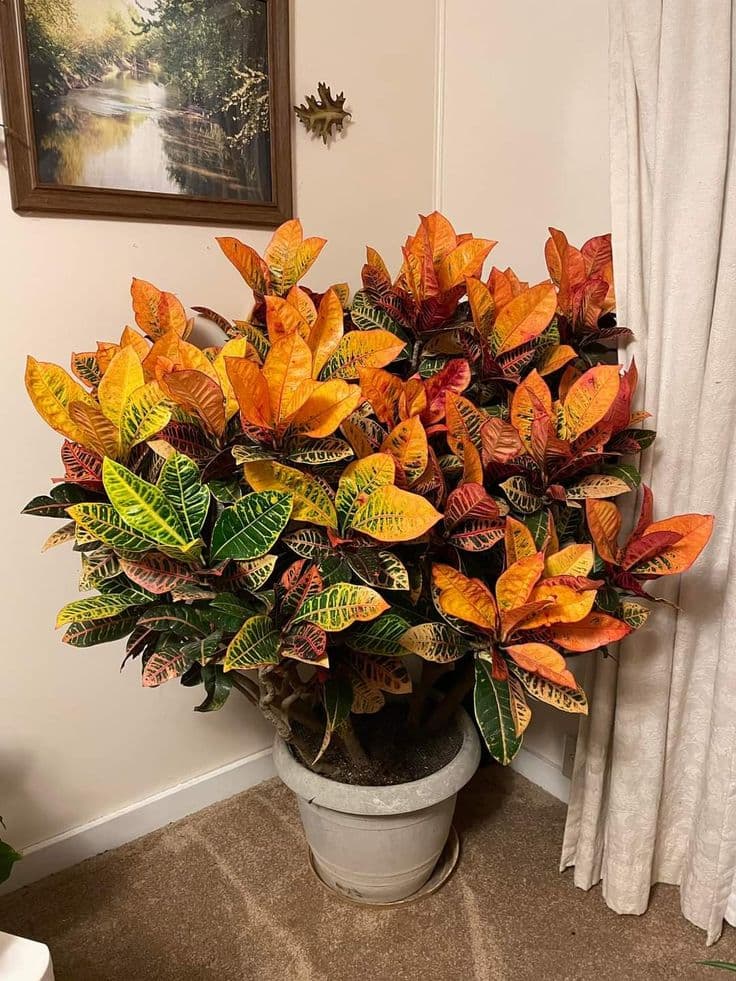
Croton
Croton is useful if you want more color.
Its leaves can contain combinations of green, yellow, orange, and red, so the plant itself becomes part of the color palette of your room.
04 — The plant guide
3. Plants for Medium Light
Not every bedroom has a large sunny window.
If your room receives filtered light or the plant will sit a few feet away from the window, there are still plenty of plants you can use.
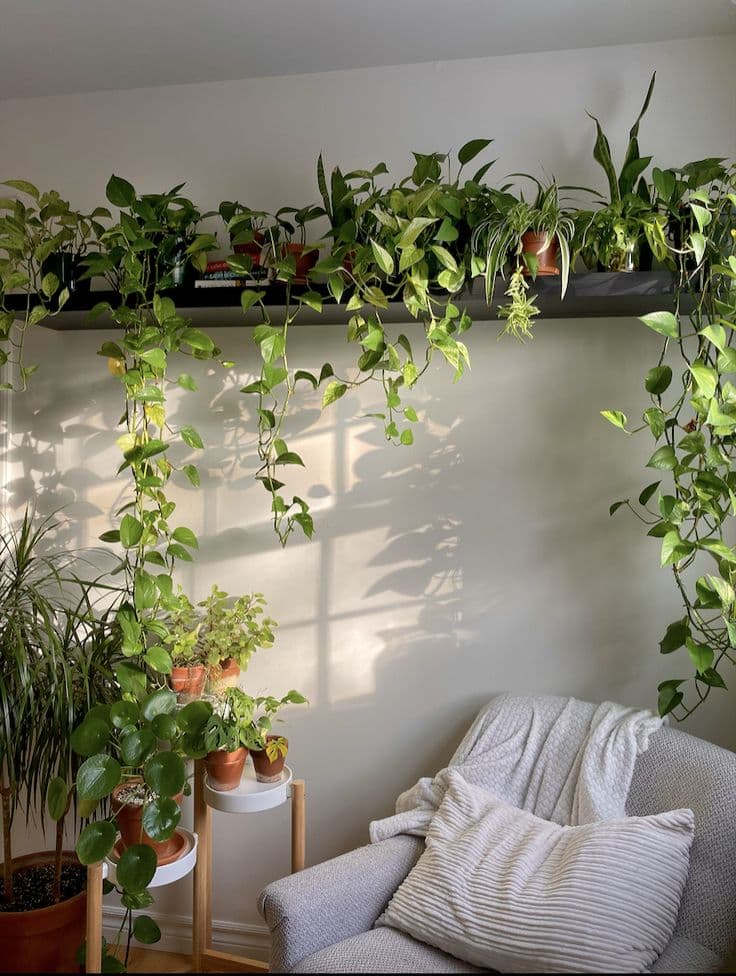
Pothos
Pothos is especially interesting for room decoration because of the way it grows.
You can let its vines hang from a shelf, place it inside a hanging planter, or guide the stems along a wall.
It is one of those plants that can become part of your room layout rather than simply sitting inside a pot.
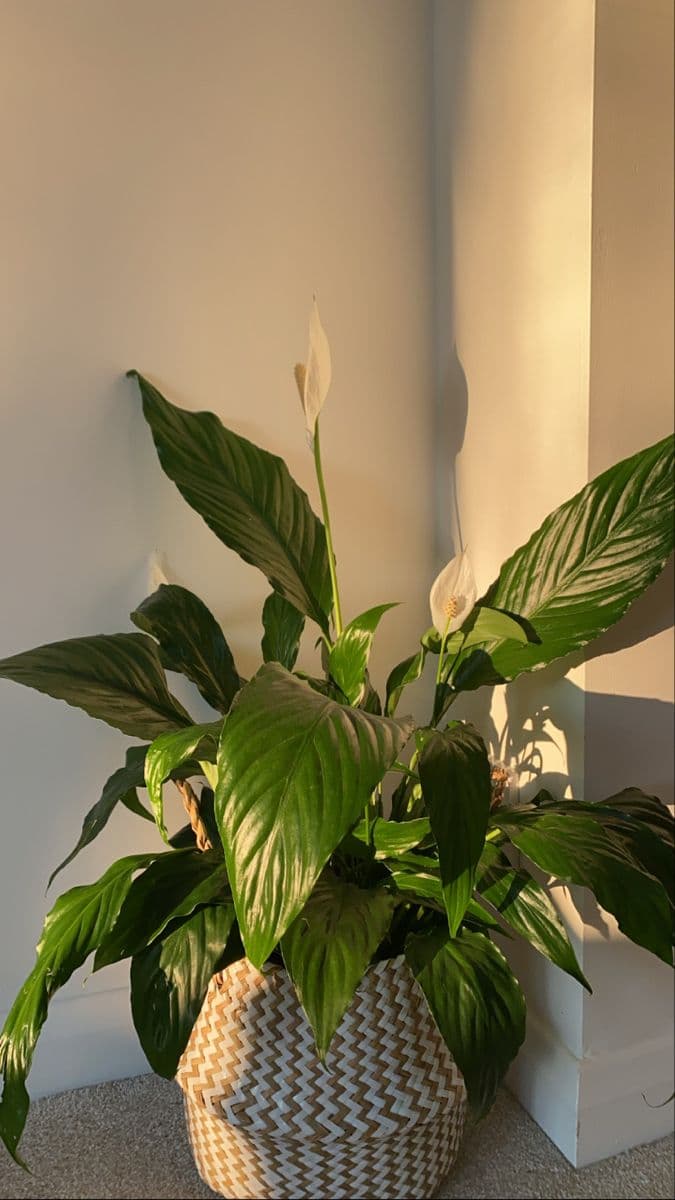
Peace Lily
Peace Lily has dark green leaves and distinctive white flowers.
It has a cleaner and slightly more elegant appearance than many leafy plants, so it can work well in simple rooms where you do not want too many decorative objects.
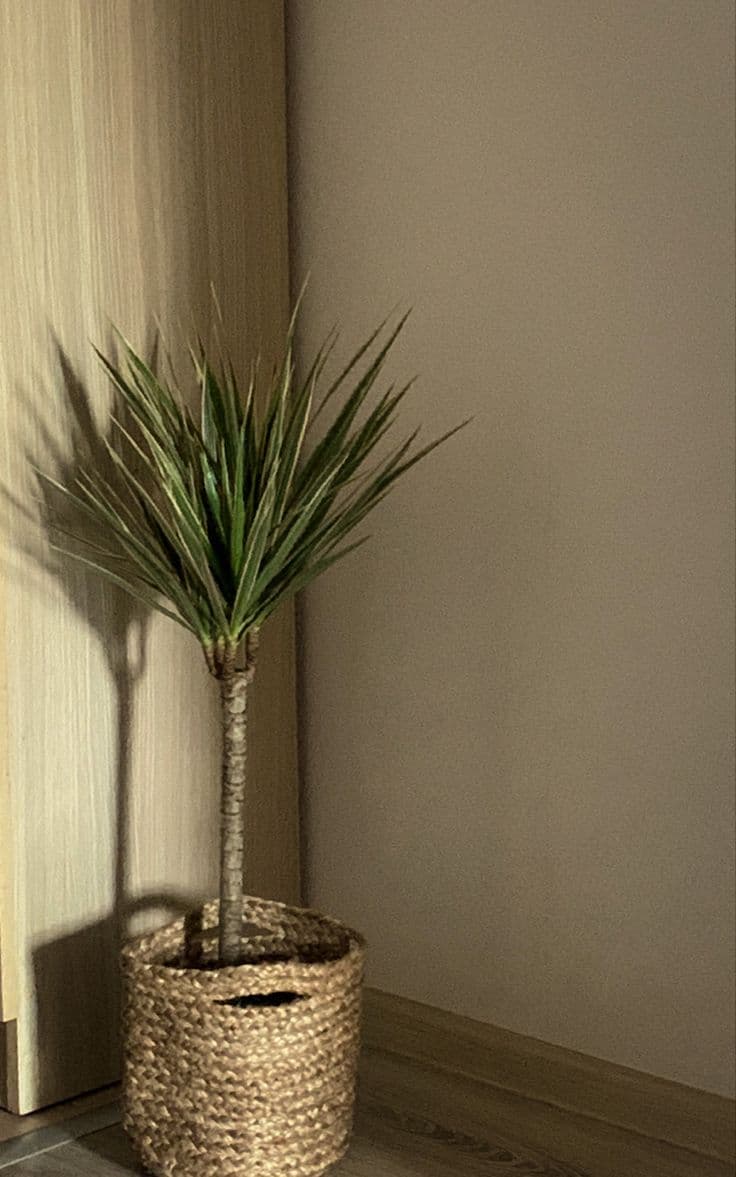
Dracaena
Dracaena grows upward rather than spreading heavily to the sides.
That makes it useful when you want a taller plant but do not have much floor space.
You can place one beside a desk, wardrobe, bookshelf, or in a narrow corner.
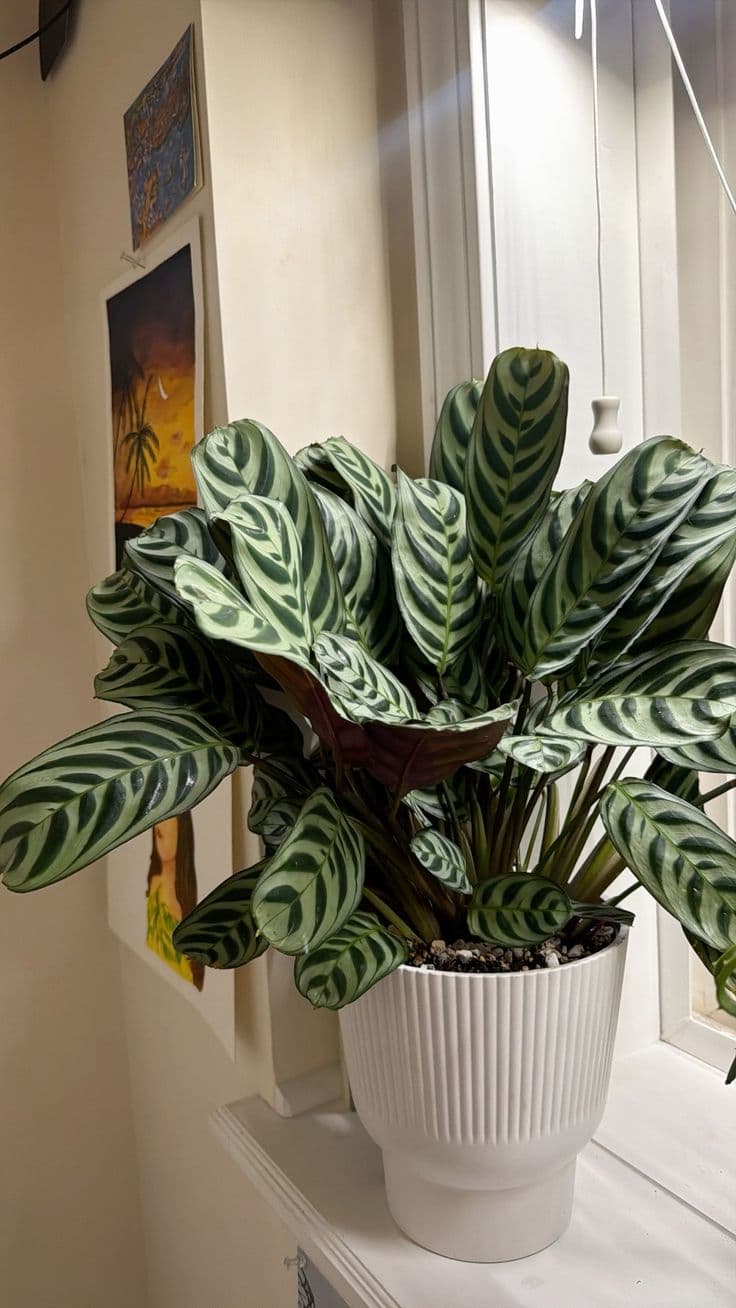
Calathea
Calathea is mainly interesting because of its patterned leaves.
Different varieties have different shapes, stripes, and colors, making it a good choice when you want the plant itself to act almost like a decorative piece.
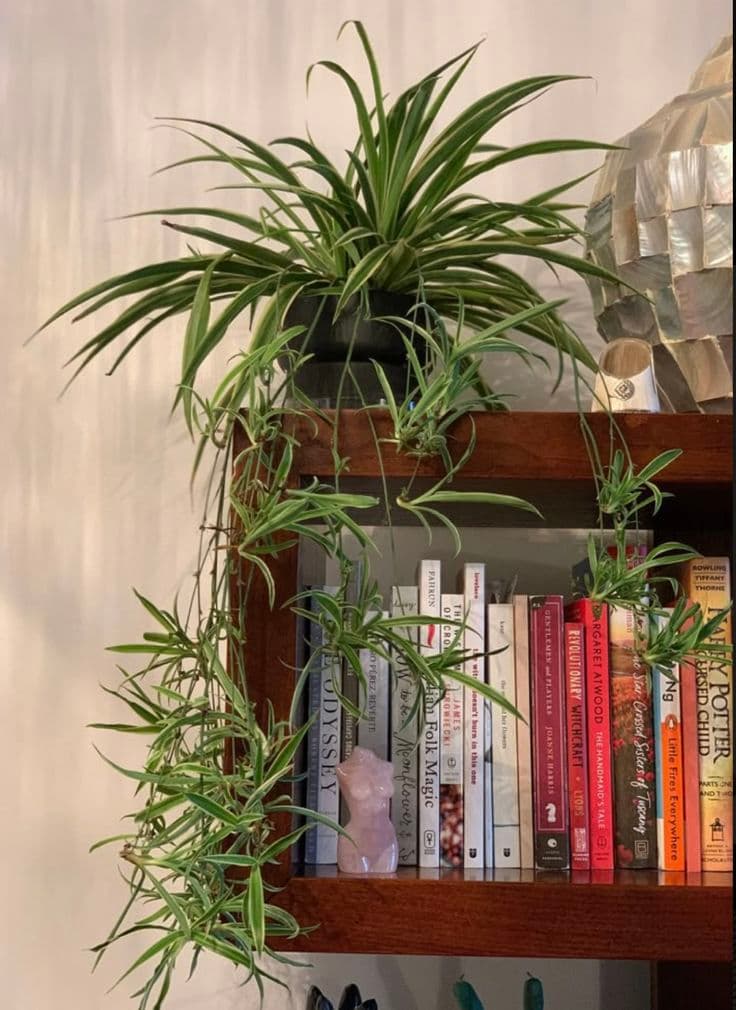
Spider Plant
Spider Plants have long curved leaves and work especially well in hanging pots.
You can hang one close to a window, place it on a high shelf, or use it somewhere where its leaves have enough space to fall naturally.
05 — The plant guide
4. Plants for Low-Light Rooms
A darker room does not automatically mean you cannot use real plants.
Some plants tolerate lower light much better than others, making them useful for rooms with north-facing windows or darker corners.
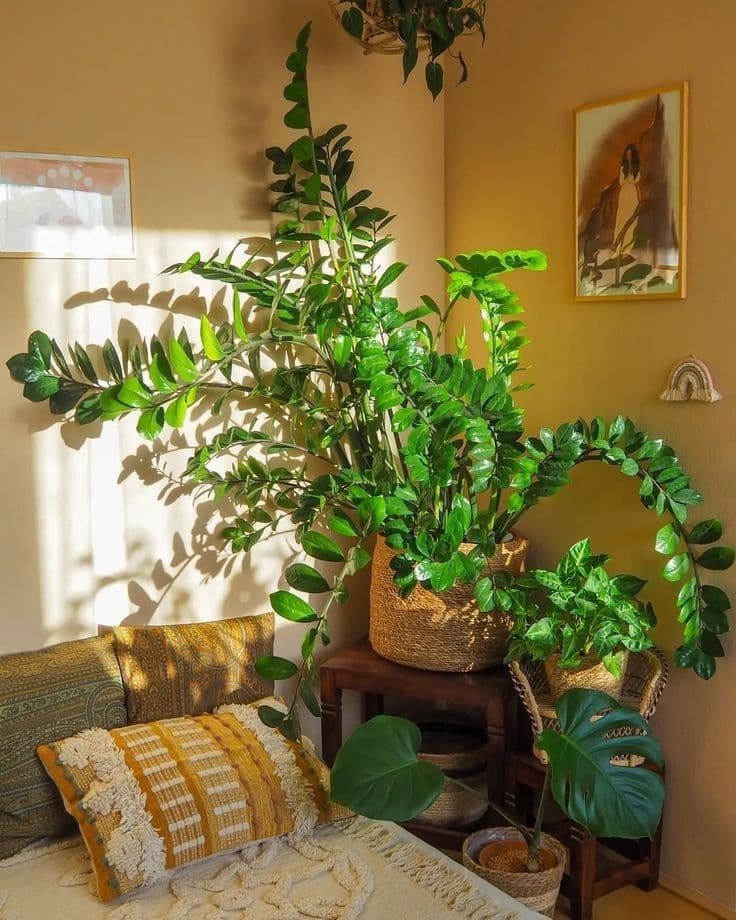
ZZ Plant
The ZZ Plant has glossy dark green leaves and a very simple structure.
It fits easily into modern, minimal, industrial, or darker room designs.
Because it grows vertically, it also does not take up much space.
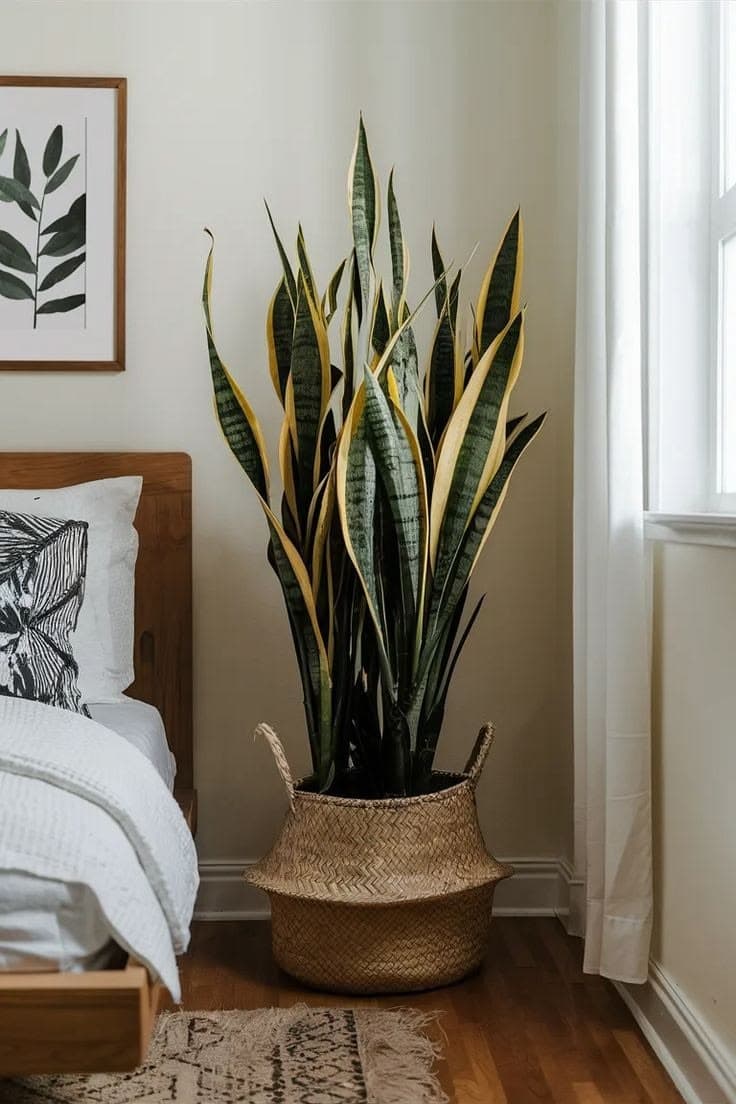
Snake Plant
Snake Plants are especially useful when decorating small bedrooms.
Their tall vertical leaves mean they can fit beside a bed, desk, wardrobe, or narrow corner without taking much floor space.
They also look particularly good inside simple ceramic or stone-style pots.
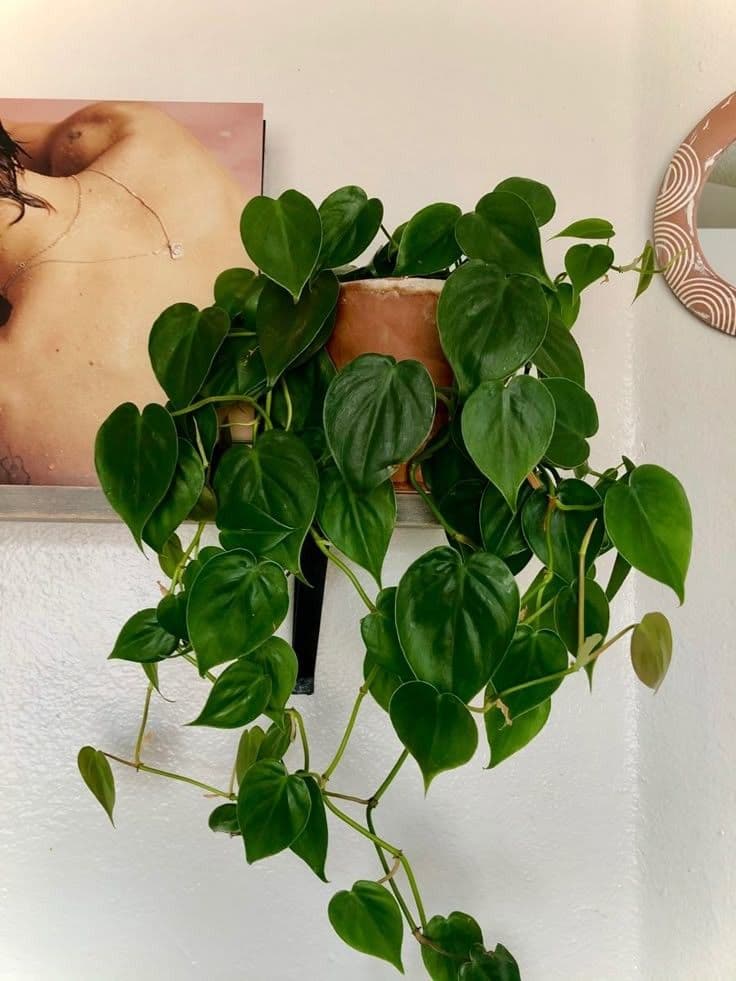
Philodendron
Philodendrons come in many varieties, but trailing types are particularly useful for room decoration.
You can place one on top of a bookshelf or cabinet and allow its vines to naturally fall down.
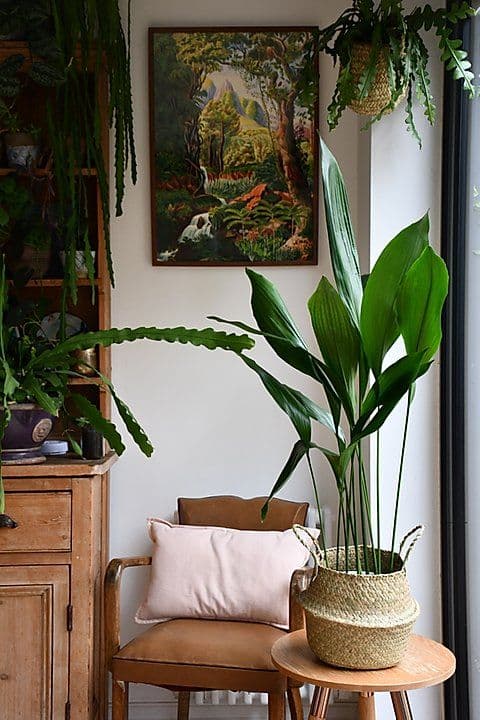
Cast Iron Plant
The Cast Iron Plant has large, simple green leaves and works well when you want something understated.
It can fill an empty floor-level space without becoming the main focus of the room.
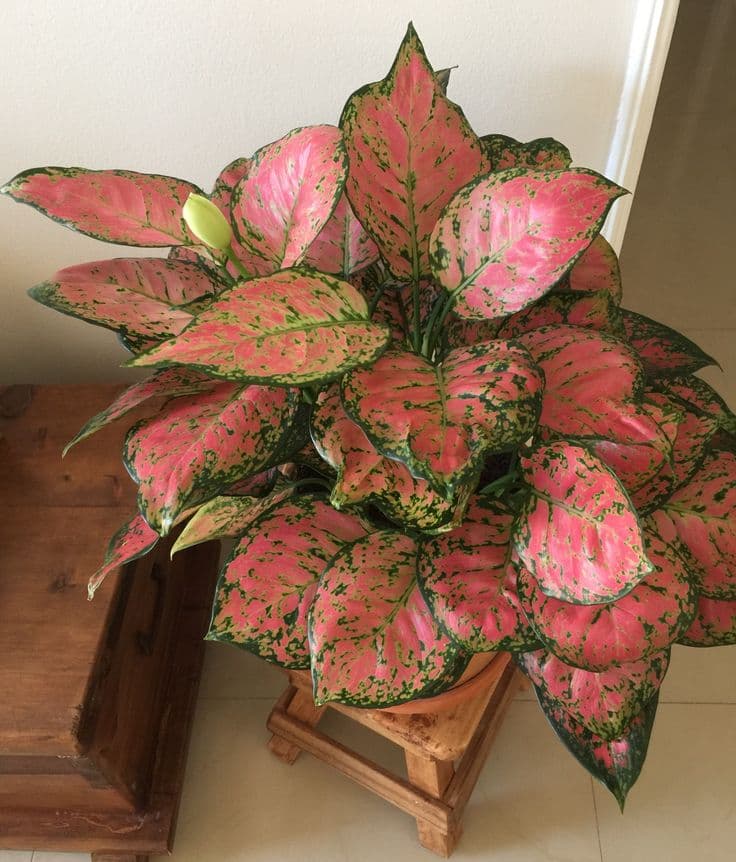
Chinese Evergreen
Chinese Evergreen is another interesting option for darker rooms.
Its patterned leaves can introduce some visual detail without needing flowers or colorful pots.
06 — The plant guide
How to Know Where to Put Your Plant
Before buying a plant, spend a little time looking at how sunlight moves through your room.
Around midday, check the area where you want to put the plant.
A strong, clearly defined shadow usually means the area receives relatively bright light. A softer shadow generally means the light is more filtered.
You should also avoid choosing the location only once and forgetting about it. Plants usually give you signs when something is wrong.
If a plant constantly leans toward the window, it may need more light. If its leaves start developing damaged or burned-looking areas, the sunlight could be too strong.
07 — The plant guide
Rotate Your Plants Occasionally
Another simple thing you can do is rotate your pots from time to time.
Plants naturally grow toward their light source, so leaving them in exactly the same position can make one side grow more than the other.
Turning the pot about a quarter turn every few weeks can help keep the plant looking more balanced.
08 — The plant guide
The Pot Matters Too
The plant is only half of the decoration.
The pot you choose can completely change how it fits into your room.
For a more natural room, try terracotta, clay, woven baskets, or wooden-style planters. For a minimal room, white, black, concrete, or simple ceramic pots usually work well.
You can also use hanging planters for plants such as Pothos, String of Pearls, and Spider Plants.
Pro tip: try to make the pot match materials that already exist in your room. If you have wooden furniture, for example, terracotta or natural woven planters can usually blend in much better than bright plastic pots.
09 — The plant guide
You Don't Need Many Plants
Adding plants to your room does not mean filling every empty surface with one.
Sometimes a large Monstera in an empty corner, a small cactus on your desk, and a hanging Pothos above a shelf are already enough.
Start with the places in your room that feel empty and choose a plant that fits both the available space and the amount of light there.
Plants Included in This Guide
The plants shown in your reference can be grouped like this:
| Light | Plants |
|---|---|
| Bright direct light | String of Pearls, Barrel Cactus, Aloe Vera, Echeveria, Ponytail Palm |
| Bright indirect light | Fiddle Leaf Fig, Rubber Plant, Bird of Paradise, Monstera, Croton |
| Medium light | Pothos, Peace Lily, Dracaena, Calathea, Spider Plant |
| Low light | ZZ Plant, Snake Plant, Philodendron, Cast Iron Plant, Chinese Evergreen |
10 — The plant guide
Find the Plant That Fits Your Room
There is no single plant that works for every bedroom. The right one depends on your available light, space, furniture, and the kind of atmosphere you want to create.
You can use small plants to decorate desks and shelves, hanging plants to make use of vertical space, or larger floor plants to fill empty corners.
Instead of choosing a plant only because it looks good in a photo, choose one that can actually live comfortably in the spot where you want to place it.