
5 Films to Watch If You Like TONY
Five films that echo TONY’s interest in youth, creativity, mentorship and memory—and the uncertain years that shape who we become.
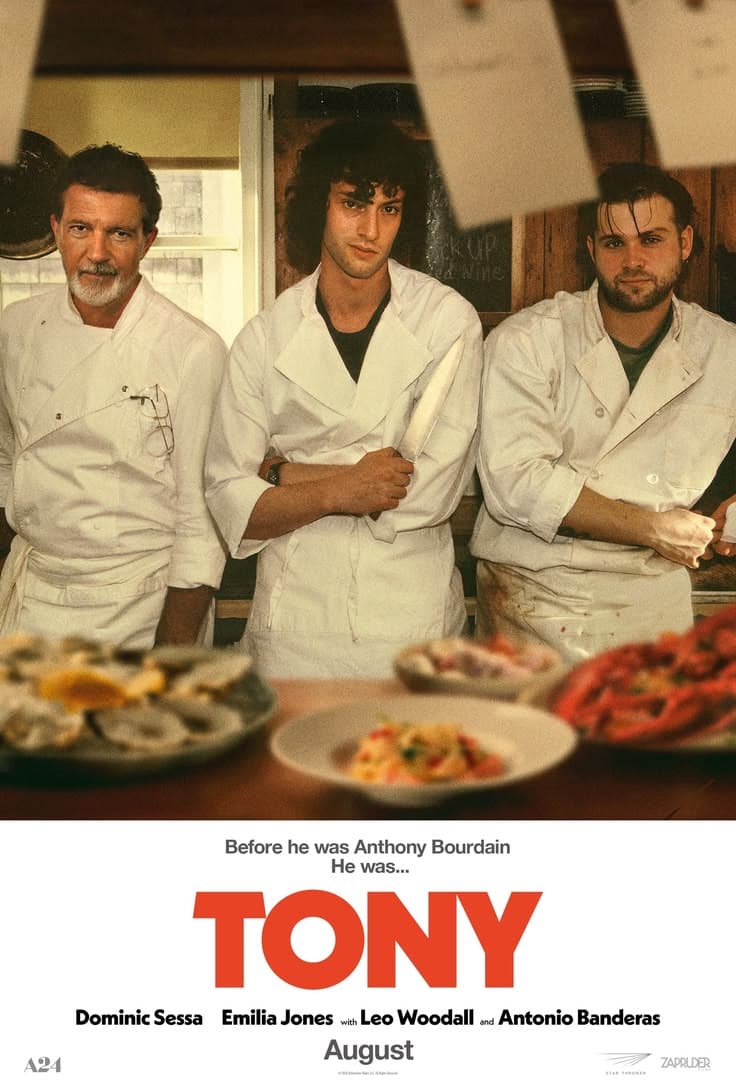
The attraction of TONY lies in spending time with someone before his name seems to explain him. Matt Johnson’s film places a young Anthony Bourdain in Provincetown, finding his way into restaurant work. The famous life waiting beyond that summer gives the story a particular tenderness. We bring knowledge that the young man cannot have. He still has to get through the day, find a place among other people, and discover what he can do with his hands. Film details at A24.
The future is almost beside the point. A kitchen can be a workplace before it becomes an origin story: somewhere to earn money, make mistakes, watch an experienced coworker, or learn when to speak and when to listen. That distinction matters. Once someone becomes famous, every earlier job risks being turned into evidence of destiny. Look more closely at those jobs and a less orderly education appears. Taste develops through proximity. Confidence arrives unevenly. A conversation can alter a direction without announcing that it has done so.
There is something generous about looking at a life this way. It allows uncertainty back into a biography whose ending might otherwise seem settled. Absorbing a town, discovering a craft, taking an unexpected friendship seriously: none of these experiences requires a perfect plan. Nor does every important encounter arrive with a lesson attached. Sometimes a person simply makes another way of living visible. Only later do we understand why we kept watching them.
The five films gathered here follow that less obvious trail. Their plots, places, and rhythms differ considerably from TONY’s. What joins them is an interest in formation: the people and surroundings through which a young person becomes more complicated, more attentive, or more recognizably themselves. Some concern artists; some question the very desire to make a life into a legend. Together they offer several ways to stay with the feeling that an ordinary afternoon might contain more of a future than anyone present can yet see.
Cinema Paradiso
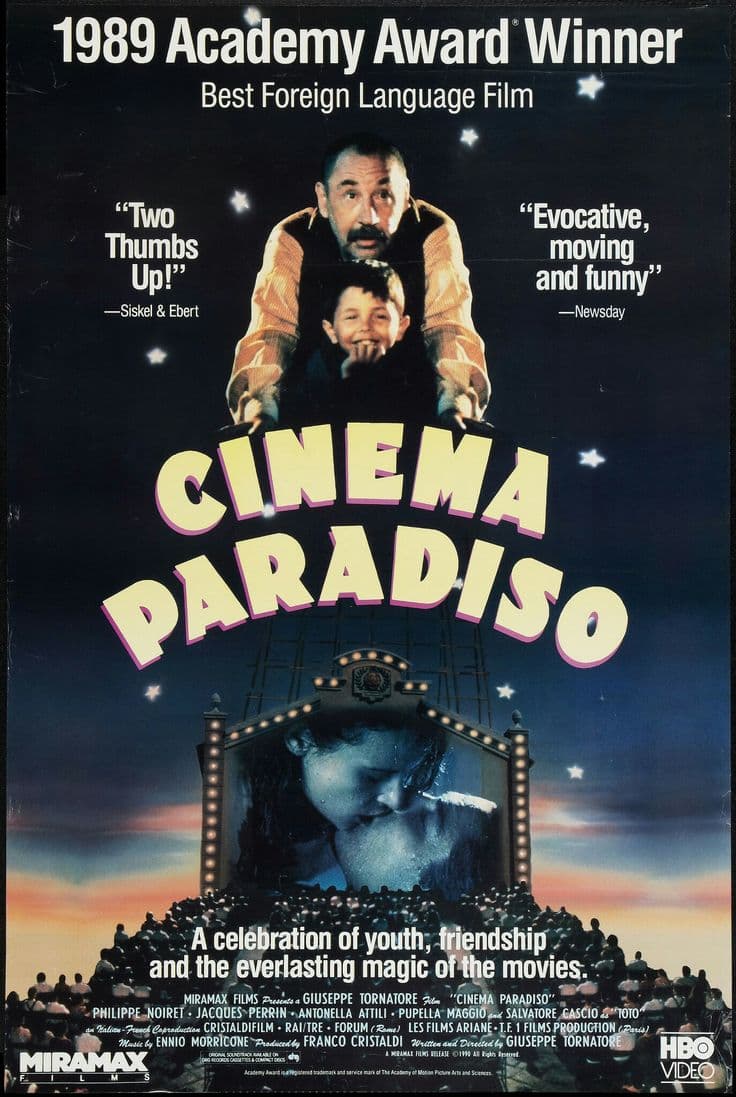
Before cinema can become a vocation, it has to become somewhere to go. In Giuseppe Tornatore’s Cinema Paradiso, the young Toto’s attachment to the local picture house brings him into the orbit of Alfredo, its projectionist. The adult looking back is a filmmaker, but the child is driven by curiosity rather than a professional ambition he could neatly describe. He wants access to a room, a machine, and a grown-up world that has caught his attention. The relationship begins in that very practical desire to be allowed near something. Cinema Paradiso — BFI.
Alfredo makes an especially useful companion to TONY’s world of work because he joins knowledge to routine. Toto does not encounter cinema solely as a succession of beautiful images. He encounters the labor that makes those images available to other people. There is equipment to understand and an audience beyond the booth. The wonder depends on someone doing a job. Seen beside a kitchen, that booth suggests how a workplace can teach two things at once: a craft, and a way of paying attention to the people the craft serves.
Mentorship here also exceeds instruction. An older person becomes important through the time they share with a younger one, including the less flattering moments of impatience and disagreement. This is more intimate than simply handing down wisdom. Toto is learning what a life devoted to a particular room might feel like. Whether he stays in that room is another question. Alfredo’s influence includes the unsettling possibility that a beloved place can give someone the means to leave it.
That is why the film’s nostalgia, however affectionate and openly emotional, need not be read as completely sentimental. Memory preserves an attachment while exposing its cost. Returning in thought is not the same as recovering the years one has left behind. A place can be formative without remaining sufficient forever; gratitude and distance can coexist. The sweetness of recollection carries the knowledge that the relationship cannot simply resume where childhood left it.
For someone drawn to TONY, the strongest connection is this gap between the person now and the person later. We recognize the outline of a future that the child or young worker is still unable to read. Yet the older man in the projection booth matters before we know what Toto will achieve. Cinema Paradiso asks us to value the friendship on those terms, too. A vocation may be its consequence, but that is not the only reason the shared hours were worth having.
The Hand of God
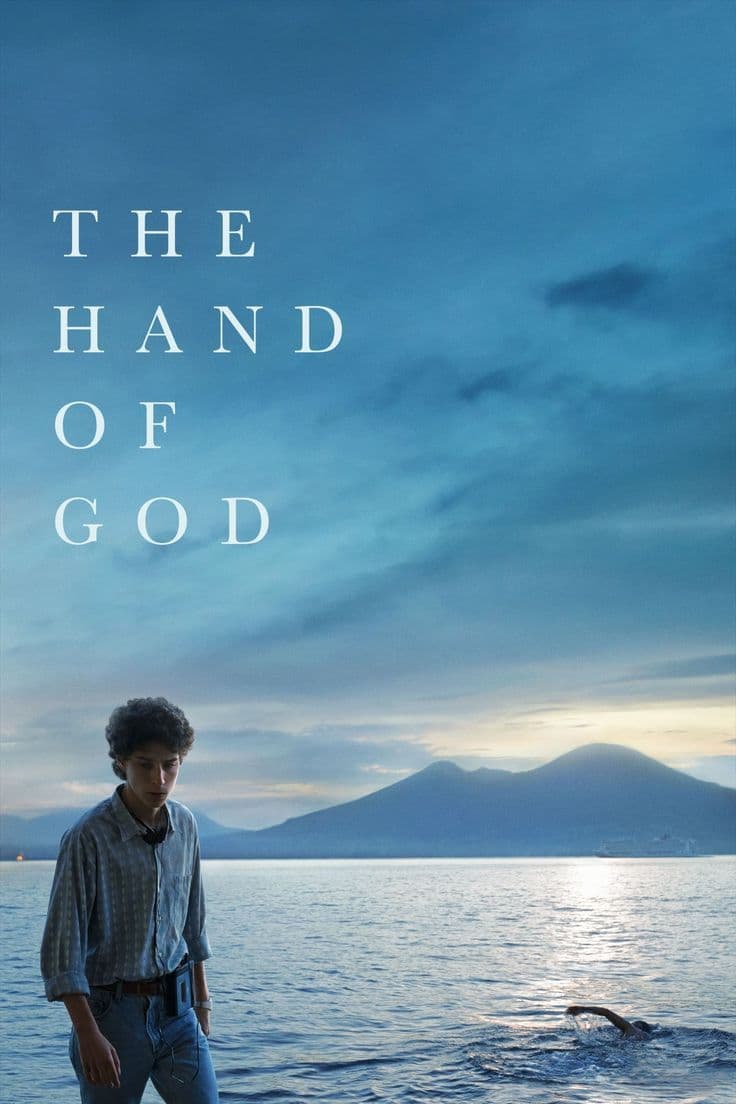
Naples gives The Hand of God its emotional weather. Paolo Sorrentino’s film, originally titled È stata la mano di Dio, follows Fabietto through adolescence, family life, devastating loss, and an emerging attraction to filmmaking. But describing it as the beginning of an artistic career misses how much of its life belongs to people who are not thinking about art at all. Relatives occupy space, interrupt one another, and become absorbed in their own concerns. Fabietto’s future develops amid that noise rather than above it. The Hand of God — Netflix.
This is the clearest bridge to TONY: place as an education. A city or town teaches through habits that would be difficult to put into a curriculum. How do people argue? Who gets listened to? How is affection disguised as mockery, or loneliness covered with a performance? Streets and shared meals provide information about a community long before a young person knows what to do with it. A restaurant, likewise, concentrates local life in a small space: workers, visitors, appetites, and competing ideas about how a day should be lived.
Fabietto often seems to be receiving more than he can interpret. That makes his position interesting. He is not a miniature version of a finished director, confidently collecting material for a future masterpiece. He is exposed to embarrassment, desire, humor, and grief without possessing the distance that might make them coherent. To become an artist would mean finding a form for this excess, not simply acquiring the authority to tell everyone else what it means.
The tragedy in the film must also resist being reduced to a useful step toward creativity. Suffering does not become justified because somebody later makes something from it. Art may offer a way of living with experience, but it cannot retroactively make the experience fair. Keeping that distinction intact gives the comparison with TONY more weight. A story about formation is strongest when the people in it retain the right to be confused or wounded, rather than existing only to illustrate a later achievement.
Watch this one for the relationship between observation and belonging. Fabietto’s attention grows inside a place whose rhythms he already knows, then becomes unsettled by what those familiar rhythms cannot explain. Naples is more than scenery because it determines the scale of his feelings: the intimacy of a family exchange, the pressure of other lives nearby, the possibility of departure. Beside TONY’s Provincetown, it suggests that finding a voice often begins with learning to hear the voices that surround you.
Into the Wild
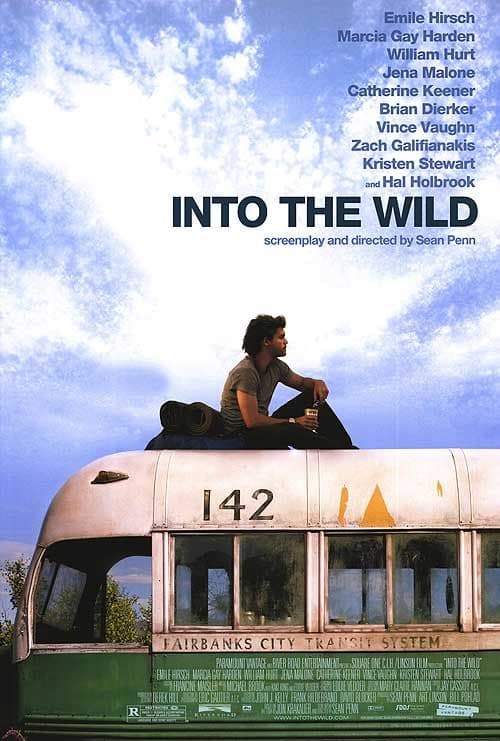
Into the Wild begins from a more drastic refusal. Sean Penn’s film follows Christopher McCandless, a young graduate who turns away from the future expected of him and sets out in search of another kind of life. The connection to TONY is not a resemblance between their plots. It is the impatience behind the wish to learn through direct experience: to test an idea of oneself against work, unfamiliar places, and people who have no investment in the identity one has inherited. Into the Wild — Paramount.
There is an understandable attraction in that wish. A planned career can make adulthood sound like a sequence of administrative decisions. Travel promises contact with something less abstract. A temporary job demands a particular kind of effort; a stranger has a story one could not have predicted; a landscape is indifferent to the qualifications one carries. TONY’s kitchen offers a smaller, social version of such an education. Into the Wild pushes the desire to escape established paths much further, toward the belief that distance itself might become a source of truth.
The film becomes most revealing when that belief meets other people. Work and brief companionship complicate the idea of the solitary traveler. Independence is repeatedly made possible by somebody’s assistance, patience, or welcome. The person passing through may think of an encounter as one episode among many; the person left behind may feel its significance differently. That imbalance gives wandering a moral dimension. Freedom has consequences for people who are not the ones doing the leaving.
It is important not to confuse the film’s attraction to movement with an endorsement of every choice McCandless makes. Self-reliance has material limits. Isolation does not remove the need for knowledge, preparation, or care, and danger is not evidence of authenticity. The landscapes can be beautiful while the desire to disappear into them remains troubling. A thoughtful viewing holds those responses together instead of turning a vulnerable young man into either a flawless rebel or a simple cautionary example.
Seen after TONY, the film sharpens a question about how identity is formed. Do we discover ourselves by getting away from other people, or by noticing what happens when we become responsible to them? A kitchen requires coordination; an ideal of total solitude promises freedom from it. Yet both stories invite attention to the encounters that interrupt a young person’s account of himself. Into the Wild is worth choosing when restlessness is the feeling you want to examine, especially when that restlessness has begun to mistake belonging for defeat.
Searching for Sugar Man
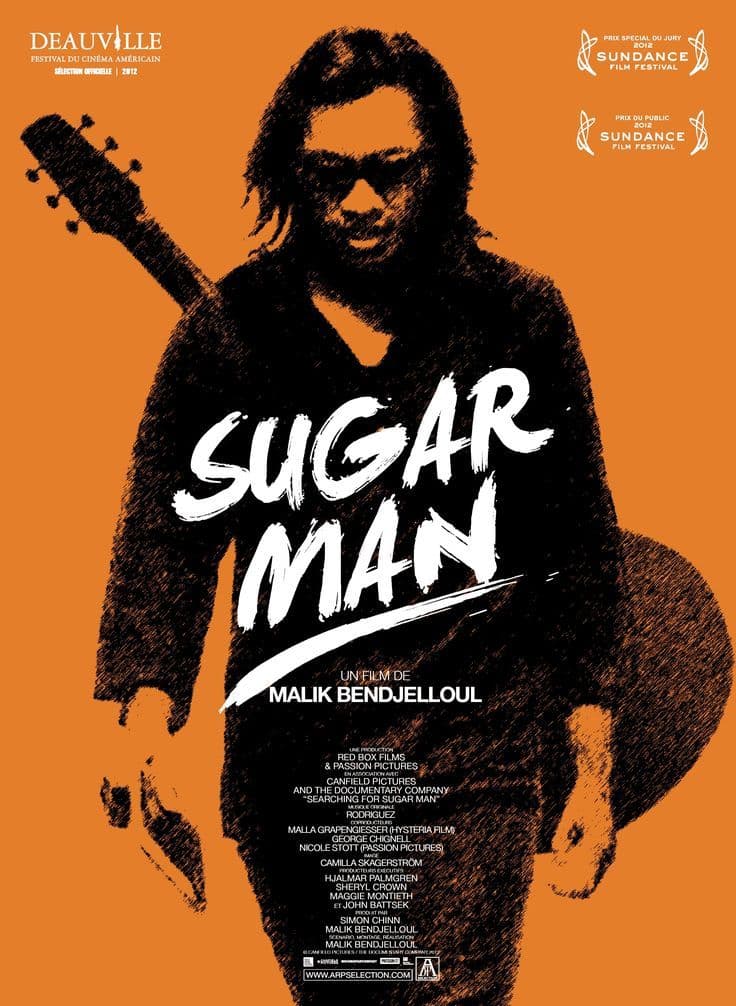
A record can arrive somewhere its maker never imagined. Searching for Sugar Man takes that separation between artist and audience as the beginning of a mystery. The documentary follows the search for Rodriguez, a musician whose songs acquired a devoted following in South Africa despite his obscurity to many listeners elsewhere. The uneven geography of that reputation matters: the same name can mean an enormous amount in one place and very little in another. Fame is not an objective measure of what a person has made. Searching for Sugar Man — Sony Pictures Classics.
This is the selection’s most direct conversation with TONY about the person and the legend. We approach a young Bourdain with the public figure already in mind. Searching for Sugar Man starts closer to the opposite end: listeners have an image of an artist, along with stories about him, and must work toward the person beyond that image. One film asks us to look before a familiar reputation; the other asks how a reputation has taken shape in the absence of reliable knowledge.
The difference makes this documentary more than a story of belated recognition. It encourages a separation between artistic value and public attention. Music can matter intensely to people who know almost nothing about its maker’s daily circumstances. Conversely, an artist’s ordinary life does not become empty merely because it takes place outside the spotlight. Work, responsibilities, and the habits by which someone gets through a day belong to that life whether or not an audience finds them sufficiently dramatic.
It is best to watch with as little prior knowledge as possible; the discoveries are part of the film’s experience, and they need not be rehearsed here. What can be said without exhausting the mystery is that the search makes listening feel active. A song is no longer just something admired at a distance. It becomes a reason to ask questions, to reconsider an inherited story, and to notice the human being who has been hidden by it. Curiosity becomes a form of respect.
That respect also offers a way to look back at TONY. A young worker should not have to be interesting only because he will become famous. Nor should an artist’s earlier disappointments be tidied into necessary preparation for a triumphant ending. These are comforting narrative habits, but they can flatten a life. Searching for Sugar Man invites the viewer to loosen them: to ask what remains valuable when recognition is delayed, uneven, or simply elsewhere. The result is a different kind of tenderness, directed toward the distance between a public story and a person’s days.
A Summer’s Tale
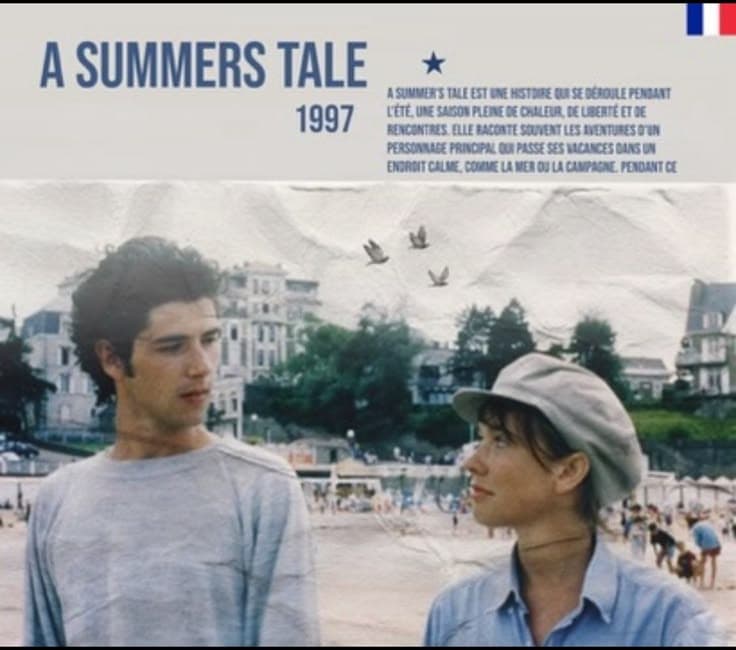
Sometimes uncertainty sounds like a perfectly reasonable explanation. In Éric Rohmer’s A Summer’s Tale, also known as Conte d'été, Gaspard spends time in the Breton seaside town of Dinard, where music and several possible relationships compete for his attention. He can talk about what he wants. Choosing, and accepting the consequences of choosing, proves less straightforward. The film gives that hesitation room to unfold at the pace of a summer whose afternoons still seem plentiful. A Summer’s Tale — Janus Films.
This is the quietest recommendation here, and perhaps the most useful corrective to the idea that growing up must announce itself through a decisive event. Rohmer makes conversation consequential without making every conversation solemn. A walk allows people to revise their positions, test an attraction, or disguise an evasion as a principle. Words have a social purpose as well as a literal meaning. Listen to what a person needs another person to believe, and an apparently casual exchange begins to reveal much more.
Gaspard’s uncertainty is not simply a lack of information that one good piece of advice could fix. Different relationships allow different versions of him to appear, and choosing between them would mean giving up some of those versions. Young adulthood often feels like that. Possibility is pleasurable partly because it postpones responsibility. There is comedy in the explanations people invent to protect that pleasure, but also vulnerability: nobody wants to discover that an idea of themselves depends on somebody else agreeing to play along.
The bridge to TONY lies in the scale of attention. A meal, a job, a friendship, or an afternoon with someone attractive may not feel like a formative experience while it is happening. It may feel temporary, repetitive, or slightly embarrassing. Later, a whole period can come back through precisely those details. A Summer’s Tale stays close to the present tense of such a period, before its meanings have been sorted into a convincing story about personal growth.
Food and conversation are useful companions in this way of looking: they give people reasons to remain together long enough for their uncertainties to show. Not every encounter produces wisdom, and a mistake need not immediately become a lesson. That patience is what makes Rohmer’s film belong beside a story of early working life. Choose it when what stays with you about TONY is the texture of being young among other people, rather than the promise of a remarkable future. Its small decisions retain their awkwardness, which is part of their truth.
What These Films Have in Common With TONY
The distinction running through these films is between a destination and a formation. A destination is easy to name: filmmaker, cook, musician, traveler, adult. Formation is harder to isolate because it includes experiences that appear to lead nowhere. The relationship that does not last, the job that pays for the next journey, the person who offers an example one eventually rejects—all can become part of a life without turning into an achievement. Cinema has the unusual ability to give that apparently unproductive time its duration back.
One consequence is a change in how we look at supporting characters. A mentor is not just there to move a protagonist forward. A coworker has a shift of their own to finish. A family member or a stranger may be absorbed in concerns that have nothing to do with the central figure’s future. When a film lets those other lives remain visible, its account of growth becomes more convincing. Identity emerges from exchanges among people, rather than from a world conveniently arranged to educate one exceptional person.
Places matter for a similar reason. They bring unlike experiences into contact: the music heard through a wall, a meal shared after work, the route taken home, the conversation that continues because neither person is ready to leave. Art does not always enter such a life as a declared ambition. It may first be an available pleasure, or a way someone else has found to endure the day. Learning a craft can begin with admiration; learning to observe can begin with having no choice but to wait and watch.
These connections should not erase the differences among the films. Affectionate memory is not the same as grief. A chosen departure is not an involuntary loss, and an indecisive summer has different stakes from a dangerous journey. What makes the selection useful is the tension among those experiences. Together they complicate the question of self-discovery: how much comes from choosing, how much from accepting help, and how much from circumstances nobody would have chosen? There is no single recipe, even when a life later looks unusually coherent.
TONY belongs in this conversation because a familiar name makes the temptation to see inevitability especially strong. The more interesting question is not what this person eventually becomes, but what experiences quietly created that person—and which parts of him never fit the public story at all. Watching for those details allows an early life to remain a life, with unfinished relationships and unremarkable working days, rather than reducing it to an extended introduction to celebrity.
Before It Becomes a Story
Nobody entering a new workplace can reliably identify the conversation they will remember twenty years later. Nobody beginning a summer knows which friendship will survive it, or which passing interest will become a craft. The moments arrive mixed together: meals and mistakes, attraction and boredom, useful advice and words that only make sense after the speaker is gone.
That is what gives early-life stories their tenderness. We can recognize significance without demanding that the people inside them recognize it too. TONY offers a familiar name through which to consider this ordinary uncertainty. These five films widen the view. A person takes shape among places, work, art, and other people, usually without noticing the outline. By the time there is a story to tell, much of the making has already happened quietly.